


When Should You Use an Extended Probe for Sonic Belt Tension Measurement?
Use an extended sonic belt tension probe when the belt is wide, the pulleys are large, or the belt span is obstructed. The probe places the sensor close to the belt. Weigh three factors: belt width and pulley diameter, physical accessibility, and measurement accuracy. A sensor that cannot reach the proper measurement point can produce incorrect readings, rework, and safety risk.
Key Takeaways
- Use an extended probe for wide belts, large pulleys, or hard-to-reach spots.
- Keep the sensor 1–3mm from the belt for accurate readings.
- Choose the standard probe for small, open drives to save cost.
Reach Limits of a Standard Sonic Tension Meter
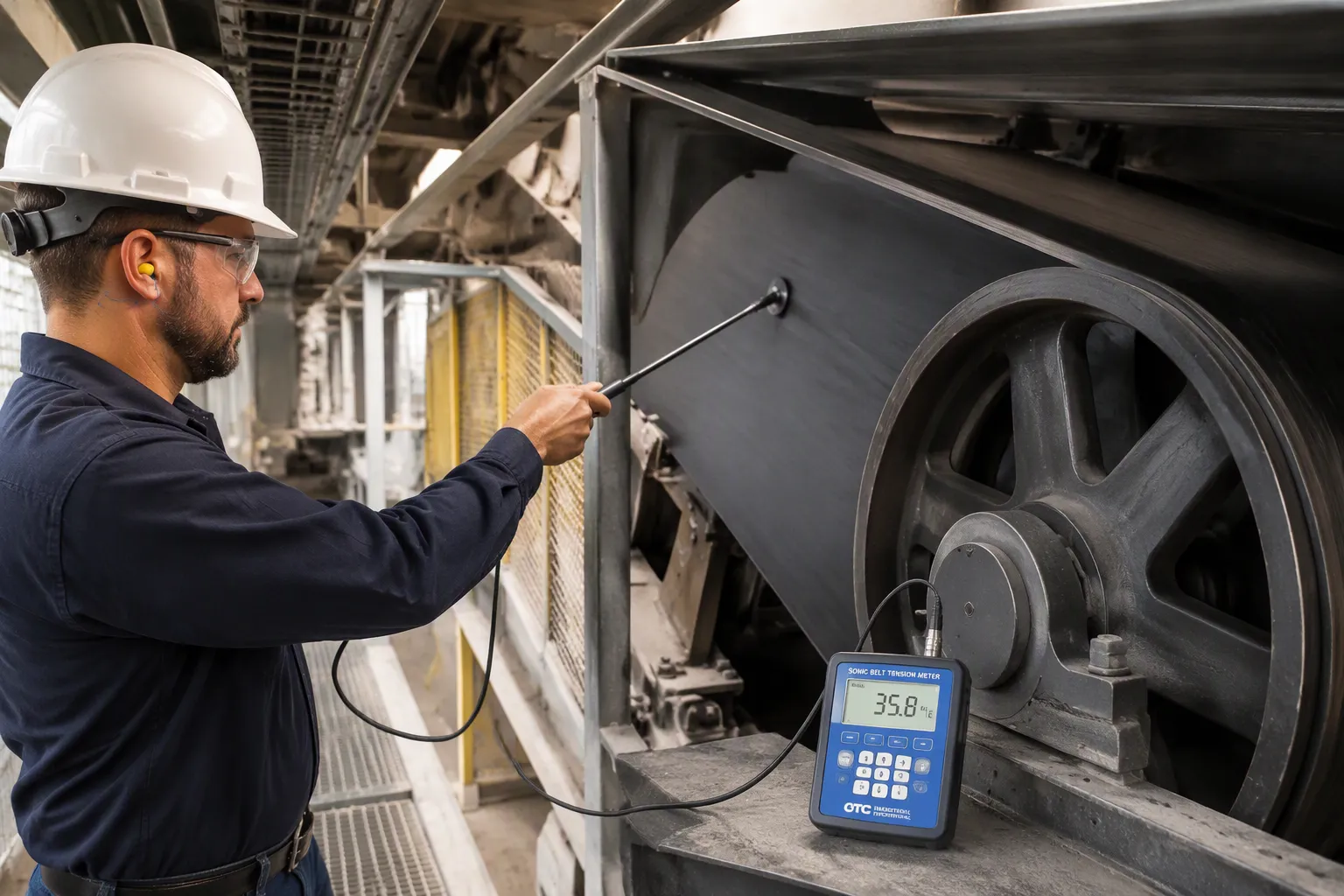
A sonic tension meter measures tension indirectly. The user plucks the free belt span, and the instrument reads the vibration frequency through a sensor held near the belt. Accuracy depends on one condition: the sensor must sit close to the vibrating span. The sonic method converts that reading into tension using the belt mass per unit length and the span length. A clean, close pickup of the fundamental frequency is therefore the foundation of every reliable result.
Belt Width and Pulley Diameter
The standard probe measures about 170mm from the meter body to the probe tip. On small drives, that reach is sufficient. The meter body fits beside the belt, and the tip rests within a few millimeters of the surface. Wide belts and large pulleys change the geometry. A broad belt pushes the meter body away from the center of the span. A large pulley raises the belt line above the frame. The operator must stretch, tilt the meter, or stand at an awkward angle. Each compromise moves the sensor farther from the belt, and the acoustic frequency signal weakens.
The extended sonic belt tension probe solves this geometry problem. Its 1-meter cable increases the operating radius tenfold compared with the standard probe. The main unit stays put on large machinery, high frames, or complex engine compartments. Only the small probe head travels to the belt. Practical thresholds are qualitative rather than fixed. Once the meter body cannot rest comfortably beside the span, or the tip cannot approach the belt squarely, reach becomes the limiting factor. Wide industrial drives and large-diameter pulleys commonly cross that line.
Confined Spaces and Obstructed Spans
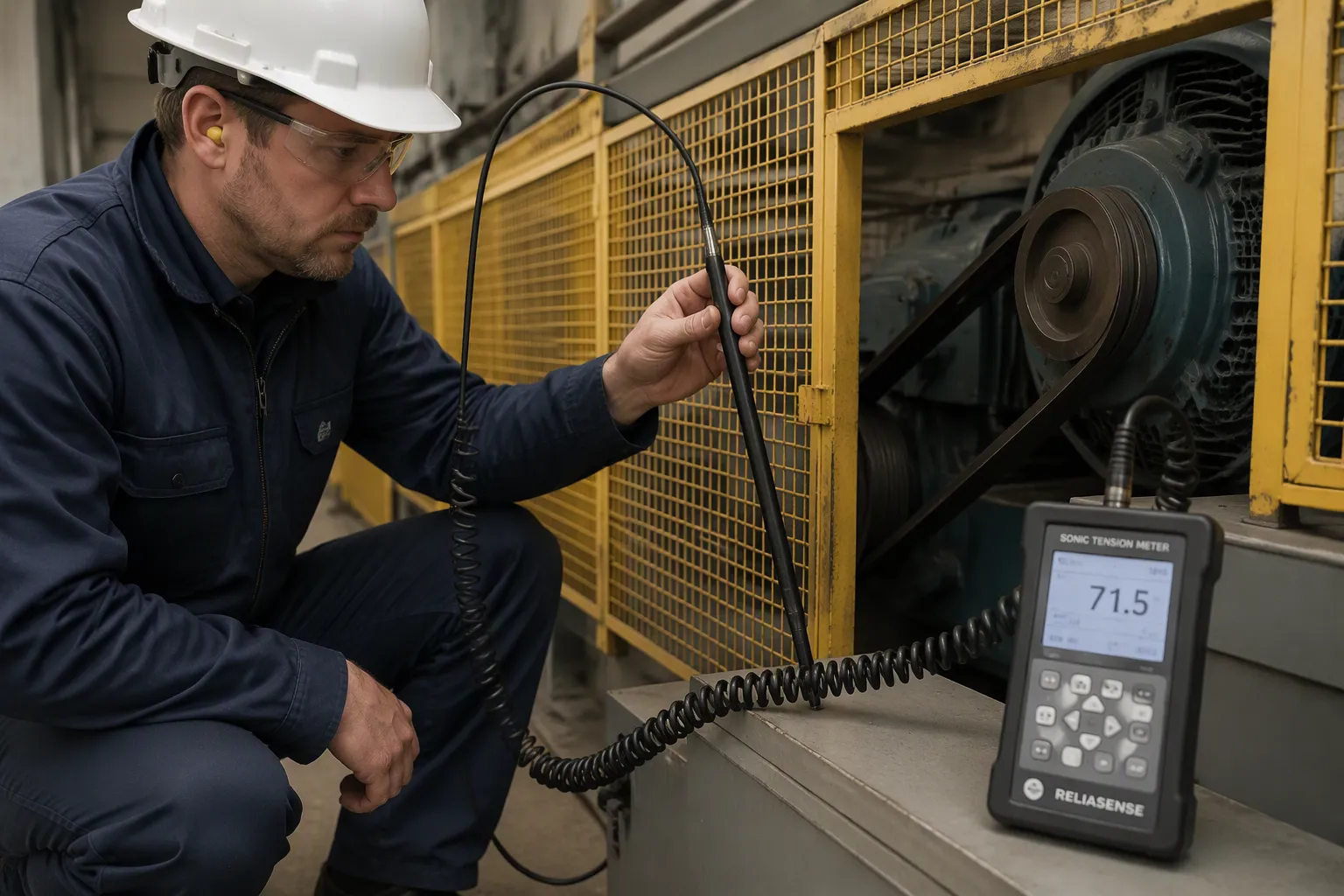
Guards, housings, and adjacent components create a second class of reach limits. Engine bays, chassis inspection points, elevator machine rooms, and warehouse logistics equipment all share the same constraint. The belt span sits behind structure, and the meter body has no room to follow the probe. An external contact sensor on a flexible cable lets the technician thread the probe into the gap while the display stays visible in open space.
SANKER builds the extended sonic belt tension probe for these situations. The locking metal plug fits mainstream models such as U-508, U-550, U-507, and SK-608, and it holds the connection stable during movement. The high-sensitivity microphone captures the target frequency while filtering external noise. For long spans, the probe also helps the user sample the same point on the span length every time, which keeps natural frequency readings consistent across checks. On timing belt tension jobs and routine v-belt tension checks alike, the external sensor turns an unreachable span into a routine measurement.
Accuracy and Workflow with an Extended Sonic Belt Tension Probe
Sensor Placement for Reliable Acoustic Frequency Readings
Hold the probe tip vertically and keep it 1–3mm from the belt surface. Tap the belt to generate the sound wave, and the sensor reads the resulting frequency. This short distance protects the acoustic frequency signal from ambient noise.
Calibrate the sonic belt tension meter for the specific belt type and span length before measuring. Take readings at the same position on the belt span each time. For multiple single belts or PowerBand belts, enter the correct belt mass per unit length. These steps keep the sonic method consistent and support accurate v-belt tension by acoustic frequency.
Check v-belt tension at installation, again 24–48 hours later, then every three to six months. This schedule catches initial stretch and confirms correct belt tension over time.
Extended vs. Standard Probe: Choosing the Right Fit
| Factor | Standard Probe | Extended Sonic Belt Tension Probe |
|---|---|---|
| Reach | About 170mm | 1-meter cable |
| Confined spaces | Limited | Threads into guards and bays |
| Workflow | Meter body stays near the belt | Main unit stays in place |
| Durability | Standard housing | Oil-resistant, impact-resistant housing; locking metal plug |
| Cost | Lower | Higher |
The extended sonic belt tension probe suits wide belts, large pulleys, and obstructed spans. Its high-sensitivity microphone or piezo sensor filters external noise, so target belt frequency measurement stays stable in high-noise environments and other noisy environments. The standard probe fits small drives with open access. Match the probe to the job, and both options deliver reliable timing belt tension and v-belt tension results.
An extended sonic belt tension probe suits wide belts, large pulleys, and hard-to-reach spans. Weigh width, diameter, access, and accuracy. Confirm the belt span and span length allow a clean frequency reading at the target tension. Match probe to job. Standard probes serve small drives, and both types deliver reliable v-belt tension and timing belt tension results.
FAQ
Which tension meter models accept the extended probe?
The SANKER extended probe fits mainstream models such as U-508, U-550, U-507, and SK-608. The locking metal plug seats vertically and holds a stable connection during measurement.
Does the extended probe change reading accuracy?
No. Accuracy depends on sensor placement, not cable length. Hold the tip 1–3mm from the belt span, enter the correct belt mass per unit length, and read the same point each time. The high-sensitivity microphone filters external noise, so the natural frequency reading stays stable. Calibrate for belt type and span length before each session.
When is the standard probe the better choice?
Small drives with open access suit the standard 170mm probe. The meter body rests beside the belt span, and the tip reaches the surface easily. Choose the extended probe for wide belts, large pulleys, or obstructed spans. Both options support accurate timing belt tension and v-belt tension work. Confirm the target tension and target frequency before you begin, and record each frequency result against the belt mass per unit length for repeatable timing belt tension checks.