


How to Verify Sonic Tension Meter Probe Compatibility Before Replacing a Sonic Belt Tension Sensor
Five checks determine sonic tension meter probe compatibility: connector type, signal protocol, voltage requirements, physical mounting, and firmware support. An incompatible probe wastes money, halts measurement work, and triggers a return process.
This guide delivers a practical, step-by-step verification process. Run these checks before ordering a replacement probe.
Key Takeaways
- Run five quick checks before you buy a replacement probe: connector type, signal protocol, voltage, physical fit, and firmware support.
- Get written confirmation from the manufacturer or supplier that the probe works with your exact meter model and firmware version.
- Use the pre-purchase checklist to avoid wasted money and measurement downtime.
Verifying Sonic Tension Meter Probe Compatibility
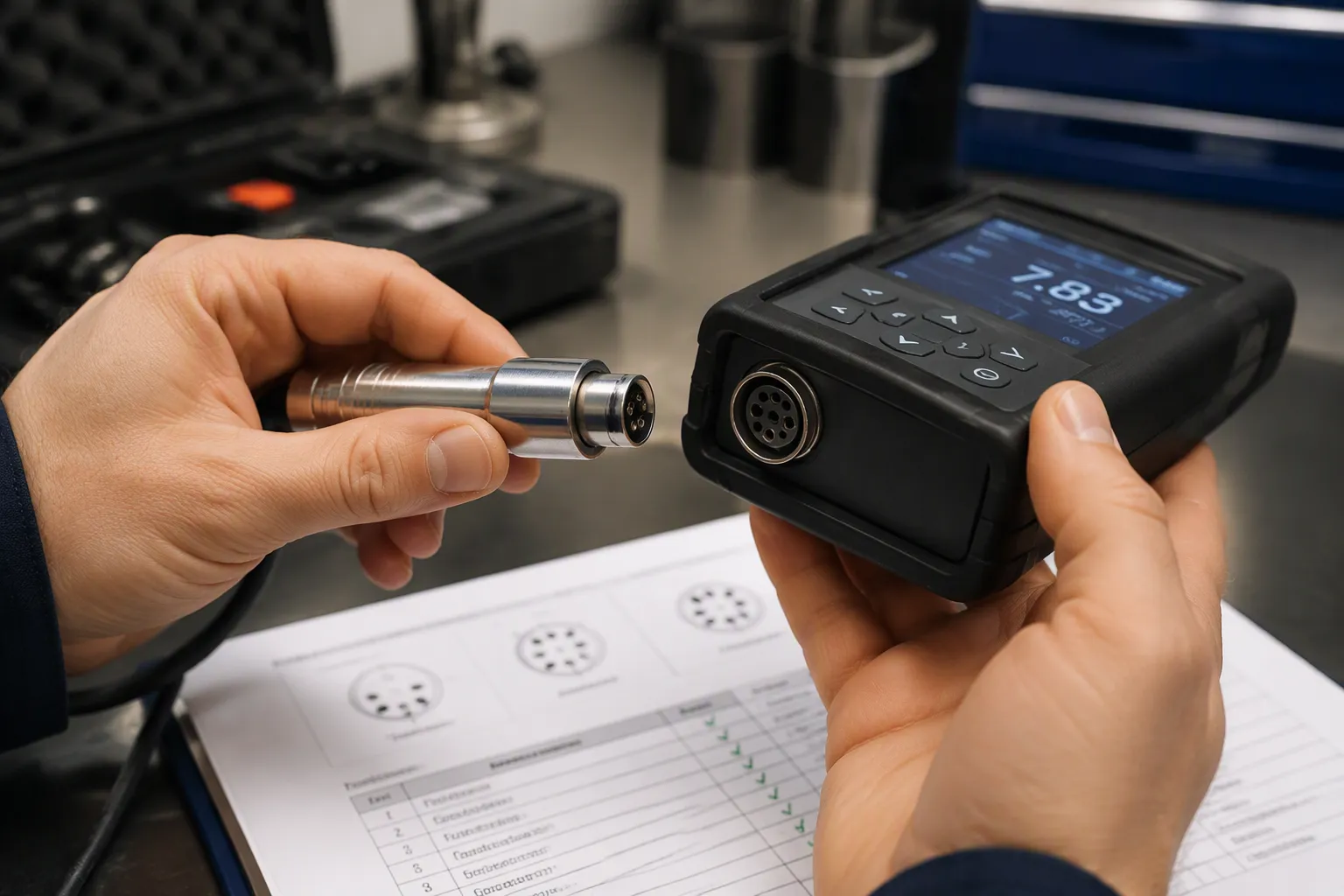
Five checks settle the question of sonic tension meter probe compatibility, and they run in a fixed order: connector type, signal protocol, voltage requirements, physical mounting, and firmware compatibility. Work through them in sequence. Each check builds on the one before it.
A probe is the sound pickup component of a sonic belt tension meter. It captures acoustic vibrations from the belt and sends them to the main unit, which calculates tension from that signal. Mainstream meters such as the SANKER series, U-508, U-550, U-507, SK-608, and Gates 550C/507C/508C-class units share standard audio or metal plug interfaces. That shared standard helps, but compatibility still must be confirmed per model.
Connector Type and Pinout
Start with the plug itself. Identify whether the meter takes a standard metal plug or an audio jack. Then confirm the pin count and pinout match the meter's input exactly. A plug that seats physically but routes signals to the wrong pins will not work.
Look for a pull-resistant, plug-and-play connector. A secure fit prevents intermittent readings that can mimic belt faults. Before ordering, place the old probe's connector beside the replacement's spec sheet and compare them point by point. This single comparison catches most ordering errors.
Signal Protocol and Voltage
The meter expects an acoustic or audio signal input. Confirm the probe's output matches that expectation. Voltage requirements deserve the same scrutiny. Check them against the meter's input specification, and do not assume a visually identical plug is electrically identical. Two connectors can look the same and carry different electrical characteristics.
A probe with a high-sensitivity acoustic chip and ambient-noise filtering supports stable readings. The chip picks up faint sound-wave vibrations while suppressing background noise, which improves both accuracy and consistency. That advantage only holds when the electrical interface matches. A superior sensor on the wrong circuit delivers nothing useful.
Run both electrical checks before moving to physical fit. Connector and signal verification eliminate the failures that no amount of careful mounting can fix. Readers who confirm these two areas first will find the remaining checks on sonic tension meter probe compatibility faster and more decisive.
Physical Mounting and Firmware Checks
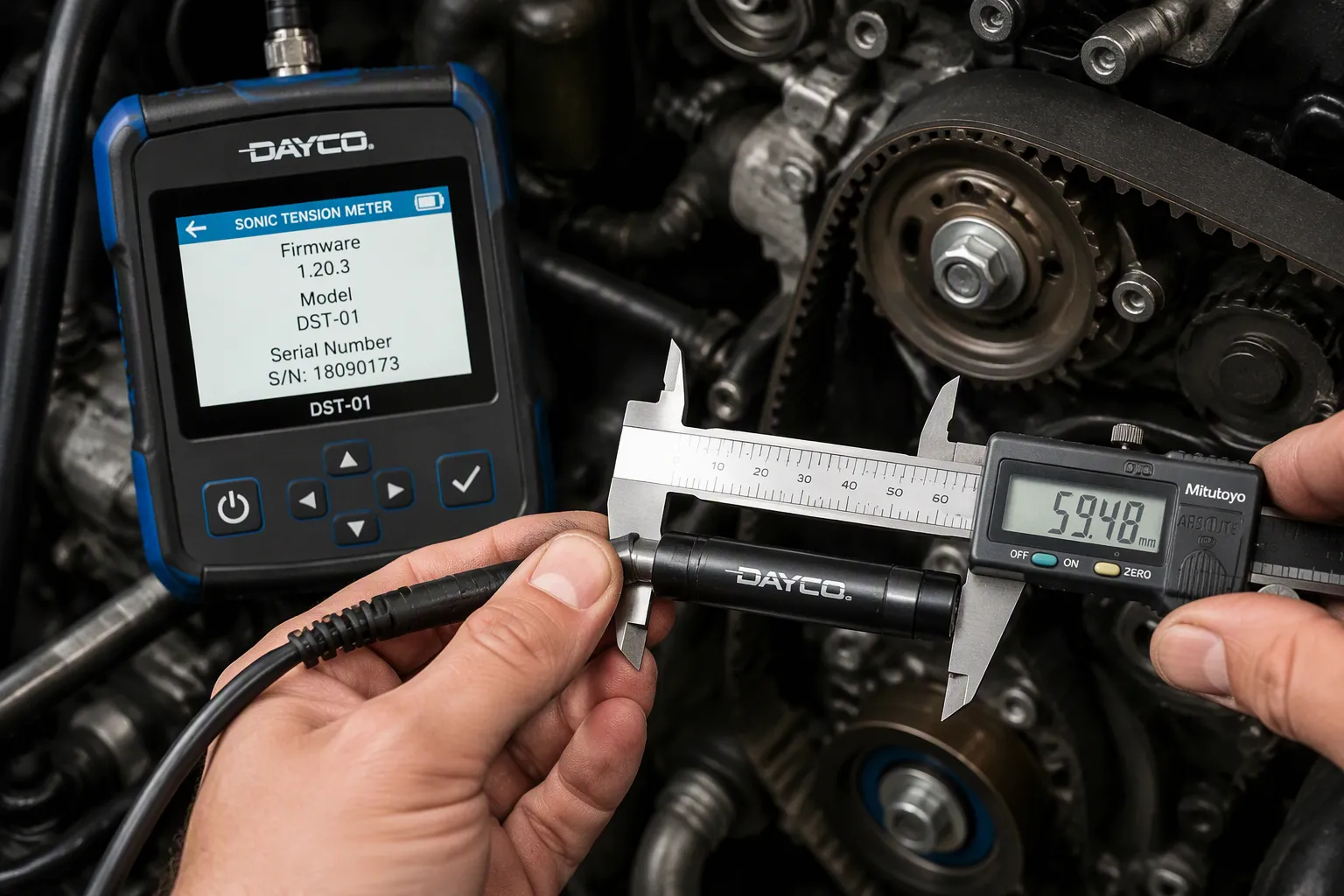
Electrical checks clear the signal path. Physical fit and firmware support decide whether the probe actually works in the field. A probe can pass every connector and voltage test and still fail on size, cable reach, or meter firmware. Treat these checks as the second half of the same verification process. Each one protects the purchase from a different failure mode.
Probe Dimensions and Mounting
Measure the space near the belt before ordering. Compare the probe body dimensions against that space, especially in tight engine compartments. A probe that fits the connector but not the clearance will not seat at the measurement point. Clearance failures surface only after delivery, when the part cannot reach the belt.
Check cable length and flexibility next. An anti-breakage cable helps in harsh industrial environments, where repeated flexing and abrasion shorten probe life. Confirm the cable reaches the belt from the meter's mounting position without strain. A stretched cable pulls the probe off angle and distorts readings.
Shell material and ergonomics matter too. A high-strength engineering plastic shell resists impact and chemical exposure. The ergonomic body allows easy placement at the angle the belt requires. Confirm the probe suits the placement angle needed for the belt being measured. Awkward angles invite hand fatigue and inconsistent contact. Test the grip in the actual workspace when possible.
Firmware and Model Support
Confirm the meter model and firmware version support the replacement probe. Check the manufacturer's compatibility list before ordering. Cross-reference supported models such as the U-508, U-550, U-507, SK-608, and SANKER series meters. A probe listed for one model may not carry approval for another, even when the plug matches. Model lists change with firmware revisions, so verify the current list rather than an old catalog page.
Some meters require belt mass constant, width, and span length inputs. Others ship with preset settings for common belt types. Confirm the probe works with those functions. A probe that feeds a clean signal into an unsupported firmware path still produces unreliable tension values. The meter may display a number, but that number will not reflect true belt tension. Confirm preset settings match the belt type in use.
Firmware support completes the sonic tension meter probe compatibility picture. Connector, signal, voltage, mounting, and firmware checks together confirm a replacement probe will restore measurement accuracy. Skip any one check, and the risk of a return grows. Run all five in order, and the ordering decision becomes straightforward.
Pre-Purchase Compatibility Checklist
Consolidate the five checks into a short yes/no list and run it before ordering. Each item earns a clear yes or no. A single no stops the purchase until resolved.
- Does the connector style, pin count, and pinout match the meter's input?
- Does the probe output match the meter's expected acoustic signal?
- Do the voltage requirements align with the meter's input specification?
- Do the probe dimensions, cable length, and shell suit the mounting space and angle?
- Does the meter model and firmware version appear on the manufacturer's compatibility list?
Cross-reference part numbers next. Compare the meter manual against the probe spec sheet, item by item. Record the source, document revision, and response date so another reviewer can follow the basis for the decision.
Then confirm compatibility in writing with the manufacturer or supplier. Build a requirement card from the equipment label, capturing the meter model, firmware release, and probe part number and revision. Ask the supplier to confirm that specific combination in writing and to state the written basis for it. Reject ambiguous replies and request the missing details before treating an offer as eligible. A precise buying request should identify the offered unit, full model and part number, condition, accessories, and the written basis for compatibility, separating confirmed points from anything requiring manufacturer review.
Written confirmation protects the purchase. Run the checklist, verify the paperwork, and the sonic tension meter probe compatibility question is settled before money changes hands.
Run five quick yes/no checks before ordering:
- Connector style and pinout match the meter input.
- Signal protocol matches the expected acoustic input.
- Voltage requirements align with the meter specification.
- Probe dimensions, cable, and shell fit the mounting space.
- Meter model and firmware appear on the compatibility list.
Consult the manufacturer's documentation or support team before purchase. Written confirmation protects against costly mistakes.
FAQ
How can I identify my meter's connector type?
Compare the old probe's plug against the replacement spec sheet. Note the plug style, pin count, and pinout. A standard metal plug and an audio jack are not interchangeable.
Will one probe fit several meter models?
Sometimes. The SANKER probe suits the U-508, U-550, U-507, SK-608, and SANKER series meters. Confirm your exact model and firmware on the manufacturer's compatibility list first.
What if my meter model is not on the compatibility list?
Contact the manufacturer or supplier before ordering. Ask for written confirmation that the probe works with your model and firmware version. An unlisted model carries real return risk.